Menu
Events

Grand T-Shirt Exhibition 2026: weber's Vintage-T Mecca Takes Over Omotesando Hills for 16 Days

Grand T-Shirt Exhibition 2026 curated by weber at Omotesando Hills Space O ends 19 Jul. 1,000+ vintage T-shirts, ticketed, 1,300-1,500 yen. Last 3 days.

著者:Go Harajuku
Grand T-Shirt Exhibition 2026: weber's Vintage-T Mecca Takes Over Omotesando Hills for 16 Days

Grand T-Shirt Exhibition 2026: weber's Vintage-T Mecca Takes Over Omotesando Hills for 16 Days

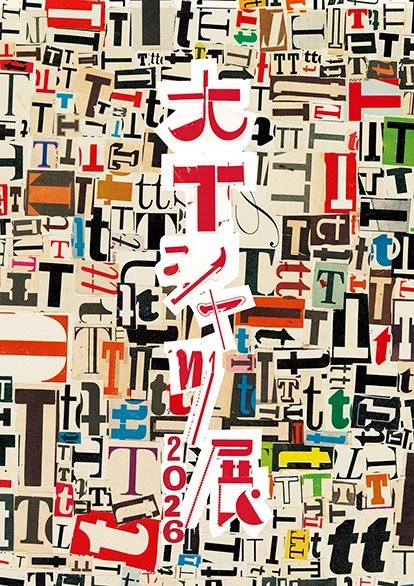
Grand T-Shirt Exhibition 2026 banner at Omotesando Hills Space O, designed by Fumiho Tachibana

On 19 July 2026 the Grand T-Shirt Exhibition 2026 closes its doors at Omotesando Hills' B3F Space O, ending a 16-day run that has quietly become the most under-the-radar fashion event of Tokyo's summer. Curated by weber, the vintage-T brand founded in 2018, this year's edition is a scaled-up "buyable exhibition" gathering over 1,000 vintage T-shirts under one roof. If you have not been yet, you have three days left.

The premise sounds simple, because it is. weber has taken the humble T-shirt, the most familiar garment most people own, and asked what makes one piece a $5 commodity and another a framed museum object. The answer, laid out across the Space O atrium at the foot of Omotesando Hills' grand staircase, is a mix of history, provenance, and the personal memory each shirt carries.

Twenty Shirts That Wrote T-Shirt History

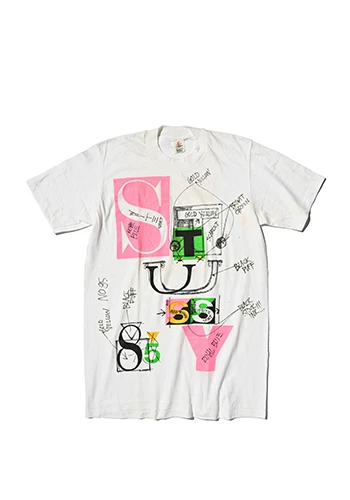
Vintage STUSSY 1985 T-shirt displayed at the Grand T-Shirt Exhibition 2026 in Omotesando Hills

The first section is the anchor. weber has selected 20 shirts it considers the most important in T-shirt history, and they read like a syllabus of late-20th-century culture. A 1985 STUSSY tee sits near a Powell Peralta "Ripper" skate graphic from 1983, designed by Vernon Courtlandt Johnson, the print that arguably lit the fuse on skate graphics. A 1990s NIRVANA shirt hangs beside Bjork's "Homogenic" tour piece. The earliest piece dates to roughly the 1930s, the dawn of printed T-shirts. None of these are reproductions.

What makes this more than a collector's flex is the framing. Each shirt is displayed as a turning point. A non-sale magazine campaign freebie, a skate-scene catalyst, an artist's merch line that changed how bands sold themselves. Walk the row once and you understand the T-shirt as a portable document of subculture. Walk it twice and you start pricing the shirts in your own drawer differently.

The Cherished Piece: Fujihara Hiroshi and a Novelist's Favourite Tee

Key visual for the Grand T-Shirt Exhibition 2026 curated by weber at Omotesando Hills Space O

The second section shifts from objects to people. Ten figures from fashion, art, literature, science, and business each loaned their "one memorable shirt" with a personal comment. The list reads like a who's-who of contemporary Japanese taste-makers: Fujihara Hiroshi (musician and producer), Takahashi Jun (fashion designer, Undercover), Akutaka Fujio (manga artist), novelist Kanbara Hitomi, Akutaguma-sho writer Nagashima Yu, editor and radio personality Nomura Kuniji, book designer Nagoi Naoko, artist Kawamura Kosuke, biologist Suzuki Toshiki, and entrepreneur Kataishi Toshinobu.

The appeal here is intimate rather than flashy. These are not the rarest or most expensive shirts in the room. They are the ones their owners could not throw away. Read the one-line comments and you get a small biography of each person through a single piece of cotton.

1,000-Plus Shirts You Can Actually Buy

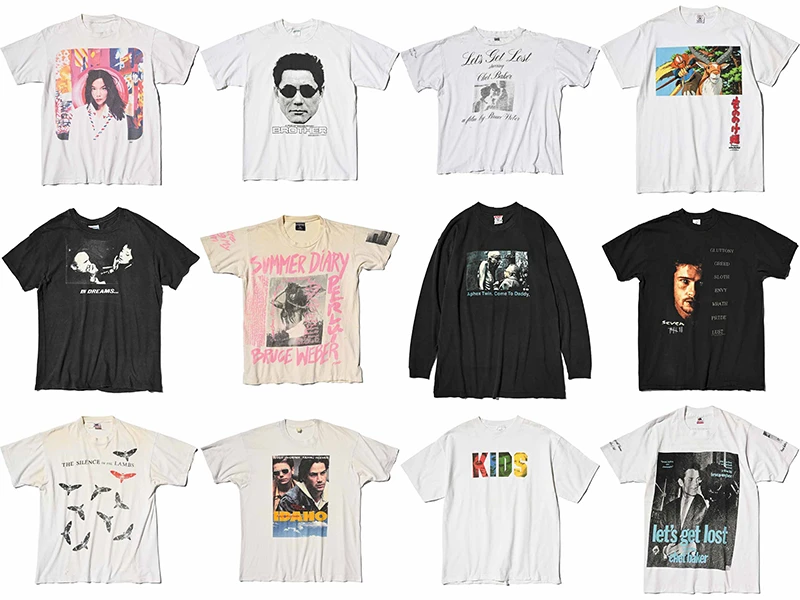
Visitors browsing over 1000 vintage T-shirts for sale at the Grand T-Shirt Exhibition 2026 Omotesando Hills

This is where the exhibition earns its "buyable" label. Beyond the display cases, weber has laid out its full archive of over 1,000 selected vintage T-shirts for sale, organised by "thing, person, event" (mono, hito, koto) and further sliced into film, music, and art zones. You can walk in, find a 1990s band tee or an obscure magazine promo shirt, and walk out with it. Prices vary by piece; bring a budget and patience, because the racks get thinned by the final weekend.

A special sub-section called the "T-Shirt Gallery" frames about 50 standout shirts like paintings. These are sold as artworks, with delivery after the exhibition closes, and each is documented in the official catalogue (B5, 184 pages, 5,720 yen). The catalogue also comes bundled with Fragment Design collaboration T-shirts at 20,000 and 22,200 yen, the only weber goods likely to outlive the show itself.

New weber collaborations drop here too. The 2026 line includes Stranger Things 1-5 x weber boxed T-shirts at 12,100 yen each and "La Gioconda by weber" prints at 8,800 yen. A parallel project with Bunka Fashion College showcases the three winning student designs from a 198-entry vintage-T design contest, printed and displayed on site.

Practical Details

  • Dates: 4-19 July 2026 (closed only on no days; runs straight through)
  • Time: 11:00-20:00 daily, last admission 30 minutes before close
  • Venue: Omotesando Hills Main Building B3F, Space O, 4-12-10 Jingumae, Shibuya-ku, Tokyo
  • Nearest stations: Omotesando Station (Tokyo Metro Ginza/Chiyoda/Hanzomon) Exit A4, 2 min walk; Meiji-jingumae Station (Chiyoda/Fukutoshin) Exit 5, 3 min walk; JR Harajuku Station, approx. 10 min walk
  • Admission: Weekdays 1,300 yen general / 800 yen university & vocational students / 300 yen high school and under. Weekends and holidays 1,500 / 1,000 / 500 yen. Weekday tickets sold at the door only. Tickets via asoview! or at the on-site counter from 4 July
  • Preview: 3 July invitation-only preview, 3,500 yen, timed entry slots from 11:00 to 19:30
  • Website: tshirtten2026.exhibit.jp (official)
  • Venue page: Omotesando Hills event listing